As special educators, we know that a lack of verbal speech does not mean a lack of understanding. Yet, traditional assessment methods heavily rely on a student’s ability to speak, read aloud, or verbally answer a question.
When you ask a student, “What word is this?” or “How many counters do you see?” and you are met with silence, you aren’t actually testing their reading or math skills. You are testing their expressive language.
To find out what your students truly know, you have to change how they respond. By using receptive language strategies and structured visual choices, you can easily bypass speech barriers to get accurate data.
1. Shift from Expressive to Receptive Language
Expressive language requires a student to produce speech or signs. Receptive language only requires them to understand and identify information.
Instead of asking a complex communicator to name a letter or a number out loud, ask them to identify it from a field of choices.
- Instead of: “What letter is this?”
- Try: “Point to the letter B,” or “Put the block on the letter B.”
This simple shift allows students to show their true academic capabilities without the frustration of trying to produce a vocal response.
2. Limit Visual Clutter with Differentiated Choice Boards
Many complex communicators also struggle with fine motor control or visual processing. If you put a massive worksheet in front of them, they might shut down because of sensory overload—not because they don’t understand the math concept.
Break your assessments down into micro-tasks:
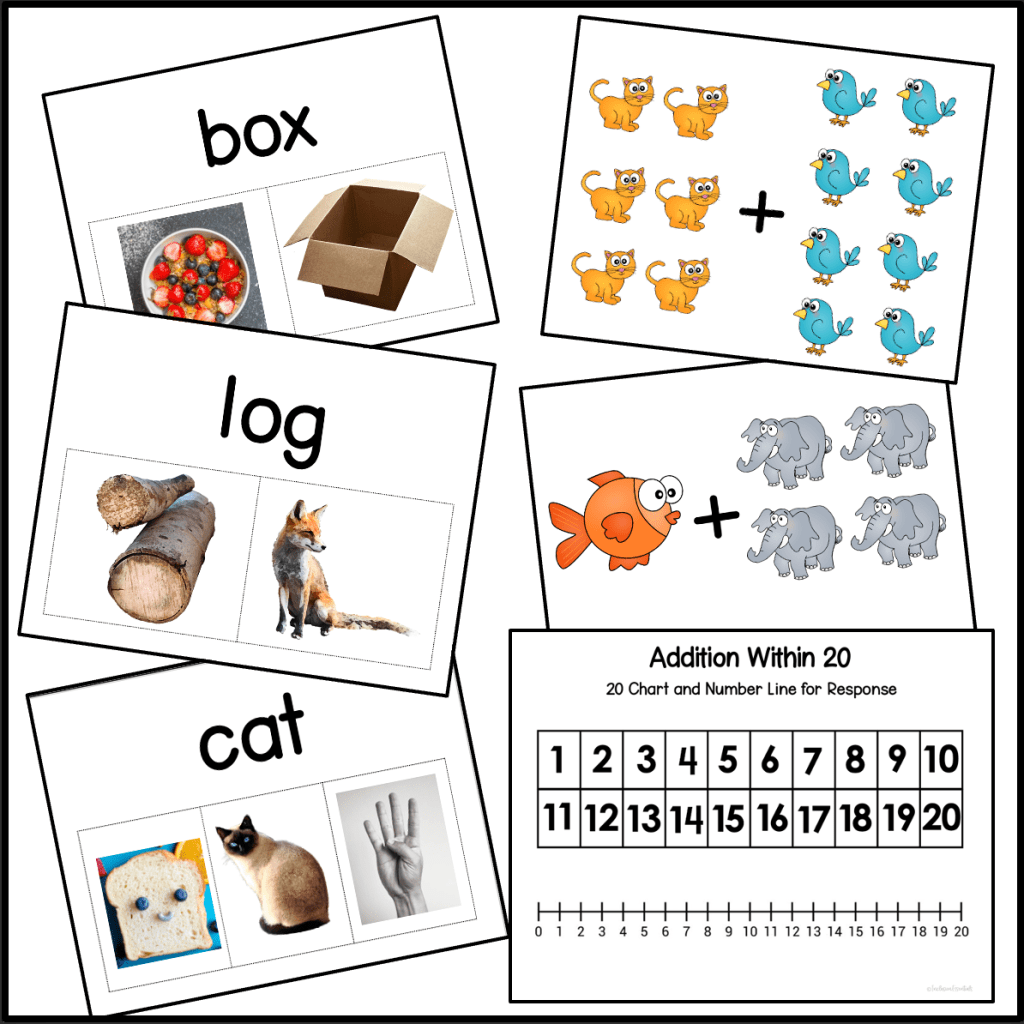
- The Field of Choice: Start with a field of 2 choices (one correct, one distractor). If they master that, move to a field of 3 or 4.
- Physical Adaptations: Use hook-and-loop fasteners (Velcro) or clothespins so students can physically grab or clip their answer. This turns an abstract question into a concrete, tactile task.
If you’re looking for activities to support your complex communicators, check out some of our task box resources or assessments created with complex communicators in mind!
 Inclusion Essentials
Leave a comment